

About Plan International


Official Enrolment Platform
About Cosmart


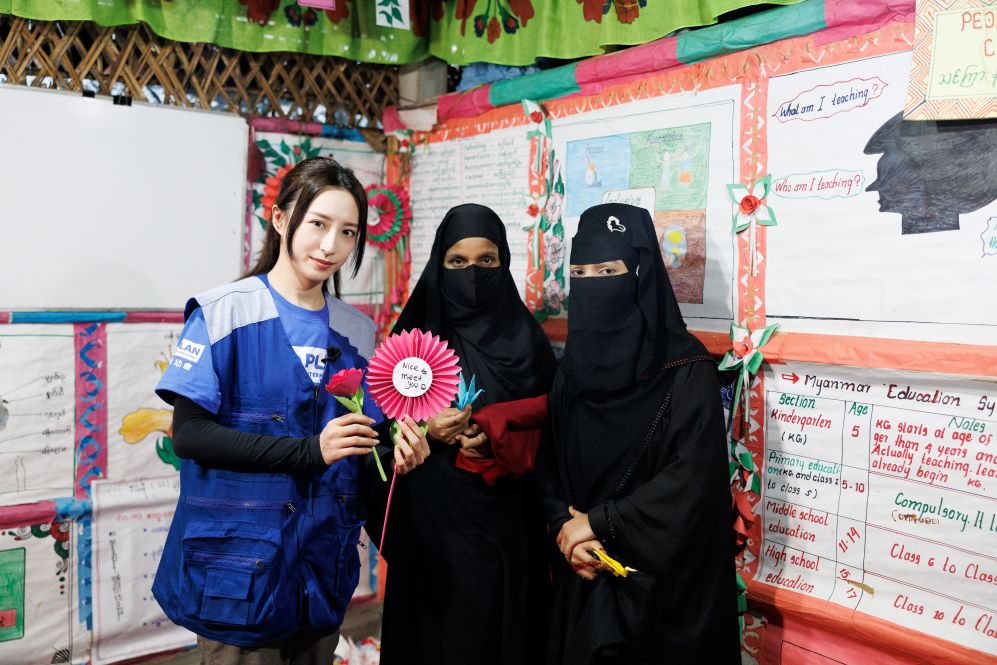
In 2017, a large-scale conflict broke out in Rakhine State, Myanmar, forcing more than 700,000 Rohingya people to flee to neighbouring Bangladesh. Since then, the Rohingya refugee camp in Cox's Bazar, Bangladesh, has become the largest refugee settlement in the world, currently sheltering over 1.1 million people.Without legal status, they struggle to access formal education or employment opportunities. Their survival depends entirely on humanitarian aid, while living conditions remain extremely harsh and their future uncertain. Many Rohingya women face threats of sexual violence during their escape from Myanmar, leaving them with deep physical and psychological wounds.
Kamila*, a 21-year-old Rohingya girl, once lived a stable life in Myanmar with her husband and young daughter. However, when the Rohingya crisis erupted in 2017, she witnessed her home consumed by flames and lost 35 relatives to the brutal military conflict. Forced to flee alone, she trekked 160 kilometres in desperation. Along the way, she tragically endured sexual violence. By the time she was found, she was utterly exhausted, her clothes torn, and her body covered in injuries.
After a harrowing journey, Kamila eventually reached the refugee camp, where she reunited with her husband. Yet her daughter was lost during the escape and remains missing to this day. Separated from her child and burdened by the trauma of sexual violence, Kamila now struggles to survive within the camp.
*Pseudonym: name has been changed to protect the identity of the survivor.
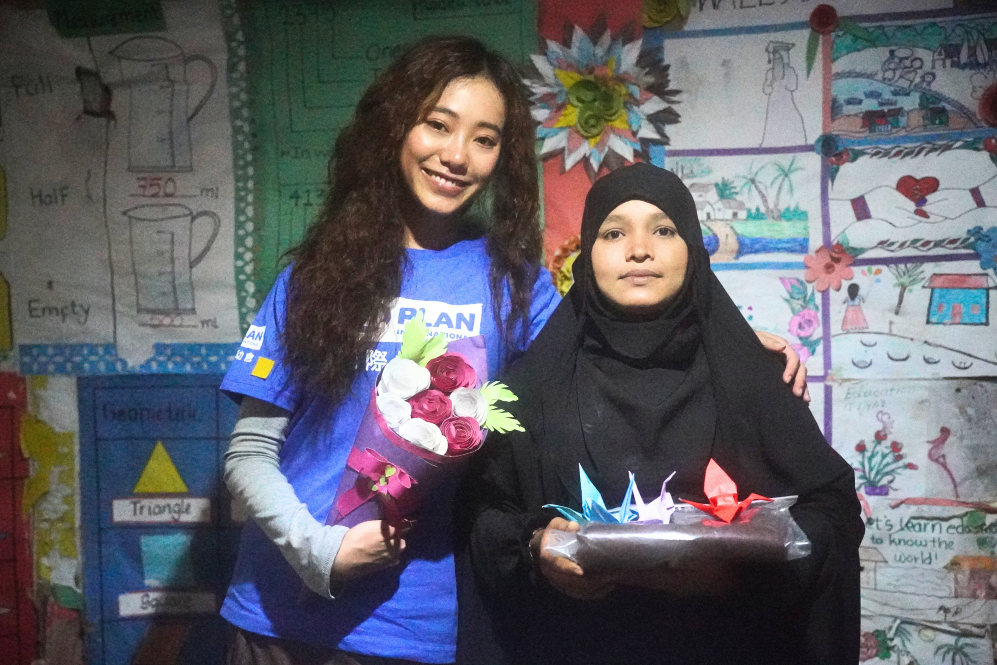
To support refugee girls in overcoming trauma and regaining hope, Plan International has been implementing girls' rights programmes in the refugee camps. Until now, the projects have provided education and skills training to 5,010 refugee girls. Salina (pseudonym), a 28‑year‑old Rohingya woman, is one of the beneficiaries. At the age of 17, she was forced to flee her home due to military conflict. During her escape, she hid in a narrow underground cave for five days, surviving only by eating leaves, with the thin air nearly suffocating her.
After finally reaching the refugee camp and rebuilding her life, her husband suddenly disappeared without explanation. Left to raise two children alone, she now struggles daily against sexual harassment from neighbours and the heavy pressures of survival, enduring helplessness and fear as she fights to carry on.
Thankfully, through Plan International's education programmes, Salina has been able to continue learning and pursue her dream of becoming a teacher. Whenever she speaks about education, the shadows in her eyes seem to fade, replaced by a radiant glow that reveals her unwavering belief: with knowledge, she can transform her destiny and build a brighter future for herself and her children.
*Pseudonym: name has been changed to protect the identity of the survivor.